Renovation dust can travel farther than many people expect. Cutting, sanding, scraping, window replacement, demolition, and other repair work can spread fine particles across floors, tools, clothing, and nearby rooms. In homes and child-occupied facilities built before 1978, painted surfaces may contain lead, making dust control an important part of project planning.
EPA’s Renovation, Repair and Painting Rule requires lead-safe work practices for many paid renovation projects that disturb lead-based paint in covered pre-1978 properties. The rule focuses on containing the work area, limiting dust and debris, cleaning thoroughly, and completing required verification steps. Utah operates an EPA-authorized RRP program, so contractors working in the state must also follow applicable Utah requirements.
Contractors preparing for covered projects can review hands-on RRP certification training in Utah for course information and practical lead-safe renovation instruction.
Why Renovation Dust Needs Careful Control
Lead-contaminated dust can be created when older painted surfaces are disturbed. EPA identifies activities such as sanding, scraping, demolition, window replacement, and repair work as potential sources of dust and debris in covered properties.
Dust can settle beyond the immediate work surface. Foot traffic, tools, equipment, and air movement can carry particles into adjoining spaces. A clear containment plan gives the crew defined boundaries and makes cleanup easier to manage.
For projects involving known or suspected lead-based paint, LeadShield provides lead-based paint project support in Utah for contractors and property professionals.
Start By Identifying The Work Area
Dust control begins before demolition or surface preparation starts. The crew should identify painted components that will be affected and determine how much space is needed to contain workers, tools, dust, and debris.
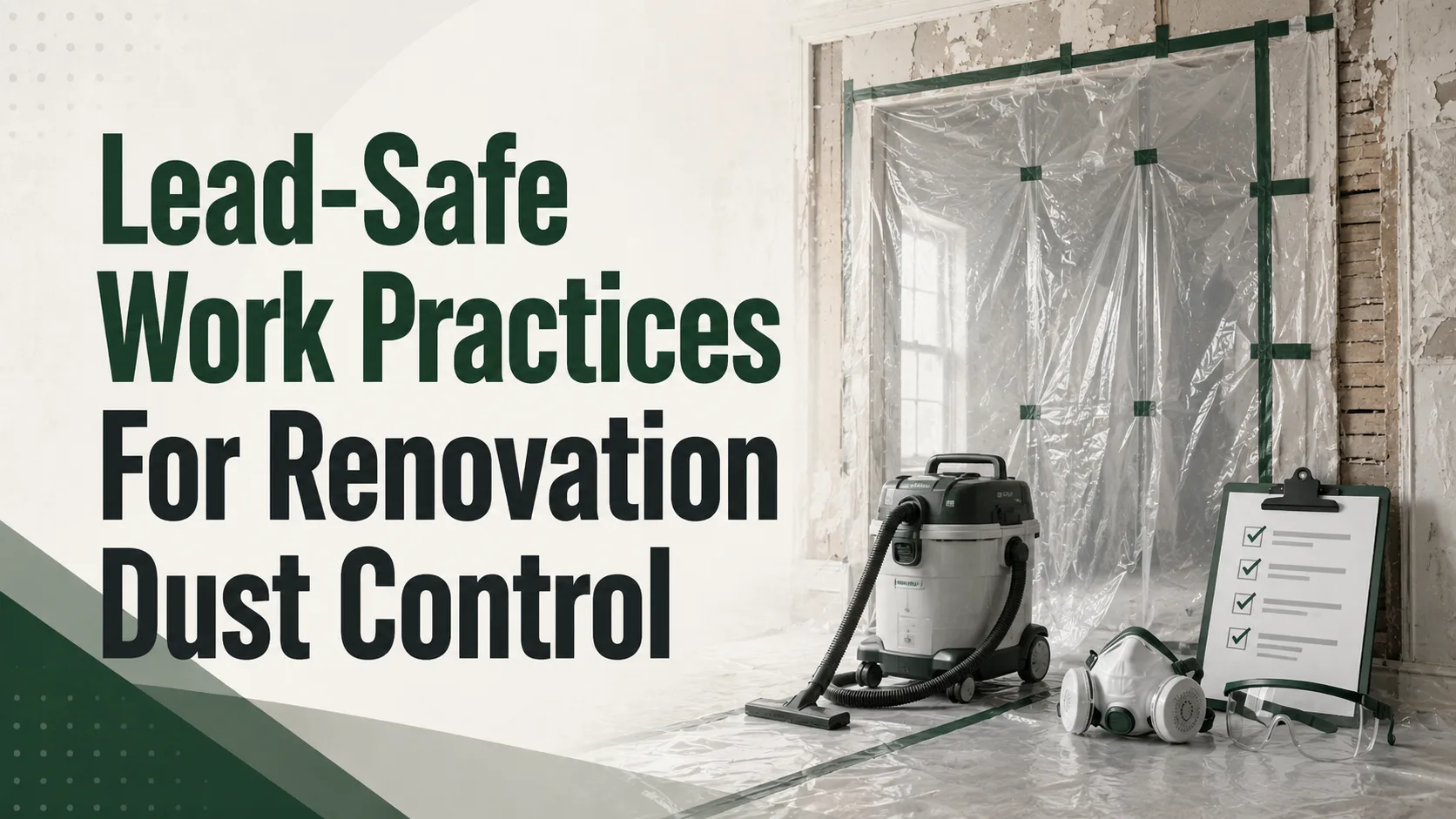
EPA guidance for interior RRP work calls for removing objects from the work area when possible or covering and sealing items that remain. Floors must also be protected with plastic sheeting according to the required work-area dimensions.
A pre-work review can include:
- The age and use of the building
- Painted surfaces scheduled for disturbance
- Doors, windows, and pathways near the work
- Furniture and belongings requiring protection
- Heating and cooling openings near the project
- Worker entry and exit routes
- Locations for tools, debris, and waste
When the presence of lead is unclear, lead testing before renovation can provide information about painted surfaces involved in the project.
Use Containment To Keep Dust In The Work Area
Containment creates a physical boundary around renovation activity. EPA’s current RRP guidance requires work-area containment designed to prevent dust and debris from leaving the controlled space.
| Work Area Element | Dust-Control Purpose |
|---|---|
| Floor Protection | Collects chips, dust, and debris |
| Plastic Sheeting | Separates work from nearby surfaces |
| Closed Or Covered Doors | Limits movement into adjoining rooms |
| Controlled Entry Path | Reduces tracking through the property |
| Covered Furnishings | Protects items remaining in place |
| Waste Containers | Keeps debris controlled during removal |
Interior projects may require doors and windows in the work area to be closed or covered according to applicable procedures. Pets and occupants should remain outside the controlled area during covered work.
LeadShield also offers lead-safe setup and cleanup assistance for qualifying lead-positive renovation areas.
Choose Work Methods That Reduce Dust
The way a task is performed affects how much dust becomes airborne. EPA’s RRP requirements prohibit certain methods during covered work, including open-flame burning and using power tools to remove paint without required HEPA exhaust control.
Crews should plan each task with dust generation in mind. Appropriate methods can include HEPA-equipped tools, controlled removal techniques, careful handling of painted components, and regular collection of debris.
Tools used inside the controlled area can collect dust, so crews need a plan for cleaning or handling equipment before it leaves the space. Designated waste locations and clear worker pathways can also reduce unnecessary movement around the project.
Clean The Work Area Carefully
Cleanup is a defined stage of lead-safe renovation work. EPA guidance directs renovation firms to collect paint chips and debris, handle protective sheeting carefully, clean surfaces, and complete the required cleaning verification process before the work area returns to normal use.
A practical cleanup sequence may include:
- Collect chips and larger debris.
- Secure waste in suitable containers or bags.
- Clean tools and equipment as required.
- HEPA vacuum applicable surfaces.
- Clean floors and other surfaces using required methods.
- Complete the applicable cleaning verification process.
- Finish required project records.
Protective sheeting should be handled carefully so collected dust stays contained. EPA’s 2026 renovation guidance also explains that post-renovation dust-lead testing applies in certain federally assisted housing situations and may be requested in other projects.
Certified renovators have specific responsibilities during covered work. Professionals nearing a credential expiration date can review RRP refresher training for renovators before scheduling future regulated projects.
Keep Dust Control Consistent Across The Crew
Containment works when everyone understands the work-area rules. Workers need clear instructions about entry and exit points, debris handling, nearby surface protection, equipment use, and keeping contaminated materials inside the controlled area.
EPA requires workers performing covered renovation activities to receive appropriate lead-safe work-practice training. A certified renovator may provide qualifying on-the-job instruction to other workers under the RRP requirements.
LeadShield’s continuing education opportunities for Utah professionals can also help eligible attendees build their industry knowledge when their licensing program recognizes applicable training.
A Practical Dust-Control Checklist
Before work begins, crews can review a short checklist covering the key stages of dust control.
Before Renovation
- Confirm the property’s age and project scope.
- Identify painted surfaces that will be disturbed.
- Review testing information or lead assumptions.
- Establish work-area boundaries.
- Protect floors, furnishings, doors, and nearby surfaces.
- Confirm required firm and renovator credentials.
During Renovation
- Keep dust and debris inside the controlled area.
- Follow required work practices.
- Maintain containment throughout the project.
- Control tools, materials, and worker movement.
- Collect debris as work progresses.
After Renovation
- Complete the required cleaning process.
- Handle protective sheeting carefully.
- Perform required verification or dust testing.
- Complete required records.
Make Dust Control Part Of The Project Plan
Lead-safe renovation starts with recognizing how easily dust can move. Planning containment, selecting appropriate work methods, managing debris, and completing careful cleanup gives crews a clear framework from the first setup step through final verification.
For Utah contractors, RRP responsibilities should be reviewed before work begins on covered pre-1978 properties. Current EPA guidance and Utah requirements provide the regulatory foundation, while training and organized jobsite procedures help crews carry those requirements into everyday renovation work.