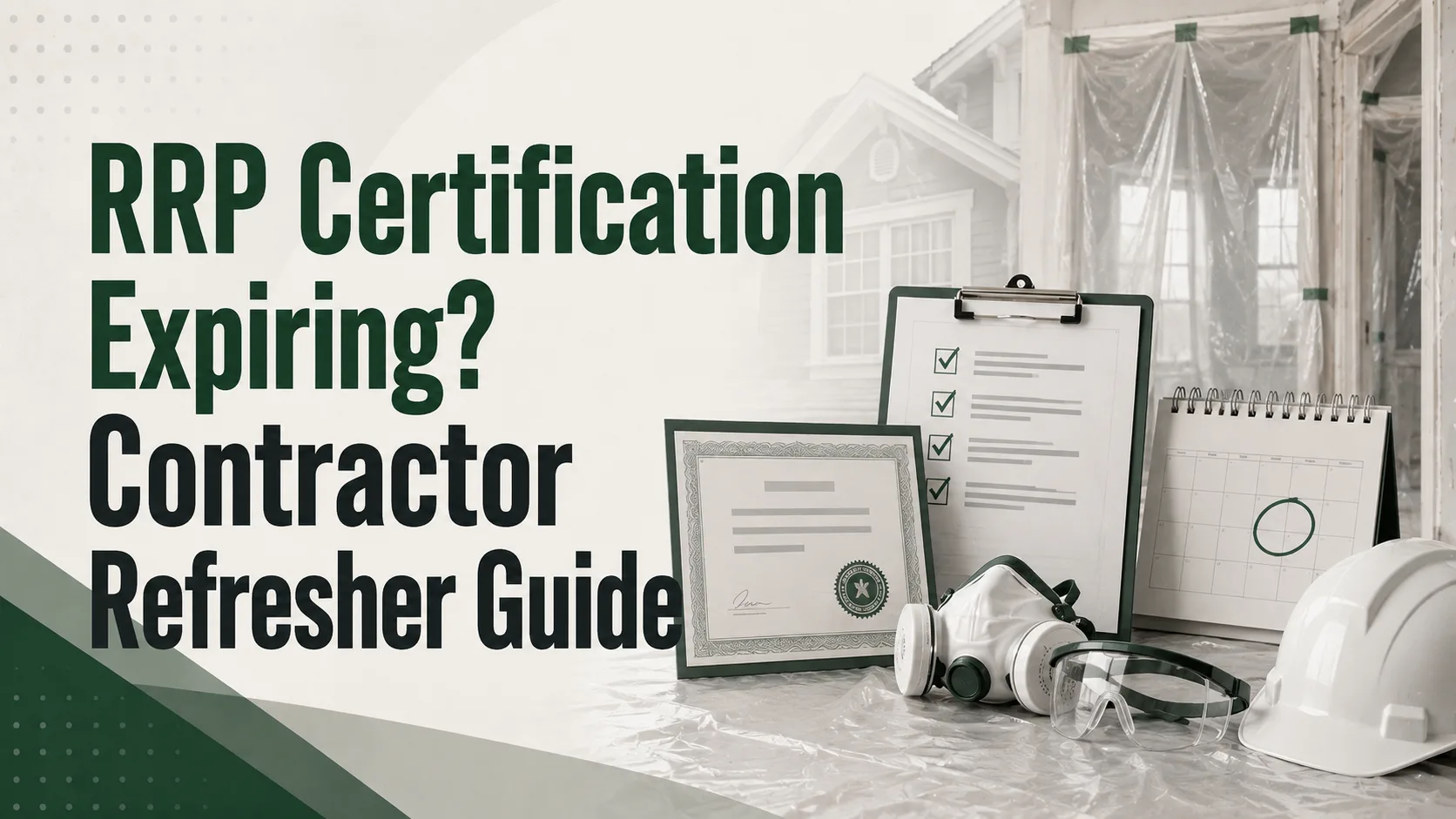
RRP certification is tied to a defined training period, so contractors who regularly work in older homes need to keep an eye on the expiration date printed on their course completion certificate. Waiting too long can affect a renovator’s ability to remain current for projects covered by lead-safe renovation requirements.
Under EPA’s Renovation, Repair and Painting program, certified renovators must complete refresher training before their current certification expires. EPA states that an expired renovator certification requires the individual to complete the full eight-hour initial course again to regain certification.
For Utah professionals approaching that date, LeadShield offers RRP refresher training for renovators designed to review current requirements and lead-safe work procedures.
How Long Does RRP Certification Last?
The length of a renovator’s certification depends on the course completed. Initial renovator training includes eight hours of instruction, with two hours devoted to hands-on learning. EPA states that certification following qualifying initial training generally lasts five years from the course completion date for courses completed on or after April 1, 2011.
Refresher training follows a different schedule based on the training format.
- Training Type Certification Period
- Initial Renovator Course Generally 5 years
- Refresher With Hands-On Training 5 years
- Refresher Without Hands-On Training 3 years
- Certification Allowed To Expire Initial course required again under EPA requirements
EPA currently states that a refresher course containing hands-on training produces a five-year certification period. A refresher without hands-on training produces a three-year period, and the next refresher must include hands-on training.
Contractors entering the field for the first time can review RRP certification training for Utah contractors to learn about the initial course.
When Should Contractors Schedule Refresher Training?
The safest planning point is before the expiration date listed on the current certificate. EPA requires renovators to complete refresher training before their existing certification expires if they want to maintain continuous certified status.
Scheduling early also gives contractors room to work around project calendars, crew responsibilities, and available training dates.
A simple renewal checklist can help:
Find your current course completion certificate.
Confirm the exact expiration date.
Review the type of refresher taken previously.
Determine if hands-on training is required this cycle.
Choose a qualifying training provider.
Complete refresher training before expiration.
Keep the new certificate with your training records.
EPA also explains that taking refresher training early starts the new certification period from the date of the refresher course. A hands-on refresher is valid for five years from that training date, while a refresher without hands-on instruction is valid for three years.
Why Hands-On Refresher Training Matters
RRP requirements involve physical jobsite procedures. Contractors need to understand containment, work-area preparation, cleaning, worker direction, and verification responsibilities that apply during covered renovation work.
Utah rules require renovator refresher courses to cover current lead safety practices, applicable laws and regulations, and current technologies related to lead-based paint work. Utah’s training requirements also call for renovators to receive hands-on refresher training at least every other recertification.
This cycle keeps practical instruction connected to the regulatory material.
Contractors who regularly handle projects involving older painted surfaces may also use lead-based paint project services when a job needs additional lead-related field support.
What Happens If RRP Certification Expires?
An expiration date deserves attention before it passes. EPA’s current renovator-training guidance states that a renovator whose certification expires must take the eight-hour initial renovator course again to regain certification under the EPA RRP program.
That can mean more classroom time compared with completing the four-hour refresher course while the existing credential remains current.
Contractors should also keep in mind that Utah administers requirements for renovation work in target housing and child-occupied facilities. Utah rules require individuals performing covered renovation work to be properly trained and require applicable renovators and firms to be certified.
Checking the certificate early helps prevent uncertainty when a pre-1978 project appears on the schedule.
What Does Refresher Training Review?
Refresher training reinforces the knowledge a certified renovator uses during covered work. Utah’s requirements state that accredited refresher courses review material from the full course and address current safety practices, laws, regulations, and technologies related to the discipline.
Topics can include:
- Recognizing lead-related renovation concerns
- Preparing and containing a work area
- Reducing the spread of dust and debris
- Directing workers performing covered tasks
- Cleaning work areas after renovation
- Completing cleaning verification
- Keeping required renovation records
- Reviewing current regulatory requirements
The need for current materials has become especially relevant in 2026. EPA states that its model refresher materials are being revised to reflect regulatory changes that took effect on January 12, 2026, and older model materials need appropriate updates before use.
How Lead Testing Fits Into RRP Planning
Training renewal and project planning often meet when a contractor arrives at an older property. The crew needs to know which painted components will be disturbed and how applicable lead requirements affect the work.
Information about the painted surfaces can help guide those decisions. Contractors and property professionals can review lead testing services in Utah when a project calls for more information about painted components before renovation begins.
Testing, documentation, and the age of the property all deserve attention during the planning stage.
Keep Jobsite Skills Current Between Renewal Dates
A certificate marks completion of training, while daily project habits keep the material familiar. Certified renovators have responsibilities that include directing workers, maintaining containment, overseeing specified stages of setup and cleaning, completing cleaning verification, and preparing required records.
For projects that need field assistance, LeadShield provides lead-safe job setup and cleanup support for qualifying renovation work.
Contractors can also build their professional knowledge through continuing education opportunities in Utah when applicable training meets their licensing program’s requirements.
Make RRP Renewal Part Of Your Training Calendar
RRP refresher training is easier to manage when certification dates are treated like other important business deadlines. Contractors can record expiration dates for certified renovators, review them periodically, and schedule training before active credentials reach their end date.
Keep copies of initial and refresher course certificates organized as well. EPA requires certified renovators to have copies of their initial course certificate and most recent refresher certificate available at covered worksites.
For Utah contractors working on older housing, staying current helps keep training, jobsite responsibilities, and project scheduling connected. Check your certificate, know which refresher format you need, and complete the required training before the expiration date arrives.